Burnham Attributes UK's Economic Slump to Brexit and Thatcher
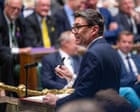
Burnham Addresses Parliament on Past Decade of Economic Underperformance
Prime Minister Andy Burnham has pointed to Brexit and Margaret Thatcher's policies as principal factors behind Britain's sluggish economic performance over the past decade. During his first parliamentary appearance in his role as leader of the government, delivered approximately six weeks after assuming office, Burnham contended that the United Kingdom must confront uncomfortable truths regarding a succession of strategic miscalculations spanning four decades of political decision-making. The Prime Minister emphasized that acknowledging these errors represents an essential first step toward national renewal.
Addressing the chamber with measured optimism, Burnham articulated his vision for redirecting the nation's trajectory. He stated, "We can make this next decade better than the last" by cultivating fresh confidence among the British electorate. His remarks reflected a determination to distinguish his administration's approach from previous governments while establishing clear accountability for the economic challenges facing contemporary Britain.
Defence Spending Commitment and Strategic Appointments
The government has signalled its intention to meet NATO commitments through increased military investment. Burnham indicated that his administration would allocate 3% of gross domestic product toward defence expenditure by 2030, aligning Britain with alliance expectations. This commitment became evident through his selection of John Healey as Chancellor, a position allocated specifically to an individual recognized for advocating robust military spending. This appointment underscores the Prime Minister's prioritization of national security within broader fiscal planning.
Water Industry Privatisation Under Review
Addressing infrastructure challenges, Burnham suggested openness toward reversing the privatisation of England's water utilities. Characterizing the current water sector as a "leaking monument" to privatisation's inadequacies, the Prime Minister declared his administration is examining "all possible solutions" to remedy systemic failures. This statement represents a potential reversal of Thatcher-era policies that transferred water management from public to private control, resonating with criticisms he earlier levelled regarding historical policy missteps.
Environmental and Energy Strategy
The Prime Minister confirmed his participation in the Cop31 climate conference in Turkey while reaffirming commitment to renewable energy advancement. However, Burnham adopted what he described as a "pragmatic" stance regarding energy supply diversification. Responding to expectations surrounding approval of the Jackdaw gasfield development, he rejected false dichotomies between fossil fuel utilization and environmental objectives. "The mistake is saying it's got to be one or the other for political purposes," Burnham explained. "The truth is, it's going to have to be both." This pragmatic positioning acknowledges both immediate energy security requirements and long-term climate imperatives.
Electoral Reform Discussion Reopened
The Prime Minister indicated willingness to revisit electoral reform within Labour's forthcoming election manifesto. While acknowledging diverse viewpoints within Parliament, Burnham expressed his conviction that transforming Britain's voting system requires broad-based consensus. "I do believe there needs to be a mandate to make that change," he stated. "There are different views in this house, but I believe we will need to get a consensus at the next election. And if there is that consensus, then a change can be made in the next parliament." This cautious approach to electoral reform balances his progressive inclinations against practical political realities.
Broader Context of Government Transition
Burnham's parliamentary address marked a significant moment in British politics, establishing frameworks for his administration's policy direction. By explicitly connecting contemporary economic underperformance to Brexit and to policies implemented during Thatcher's tenure, he constructed a historical narrative justifying his government's proposed departures from established approaches. The emphasis on correcting "wrong turns" accumulated over four decades positions his premiership as a corrective moment, whilst his appointment of ministers with specific ideological commitments signals intentional strategic direction.
The breadth of topics addressed—from military spending through water privatisation to electoral systems and energy policy—demonstrates an administration confronting multiple inherited challenges simultaneously. Each policy announcement reflects attempts to balance ideological commitments with pragmatic governance requirements, a tension that characterizes contemporary British politics.