Cairngorms Wildfire Declared Major Incident as Wind Shifts Risk
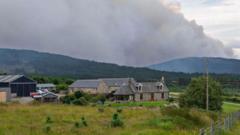
Cairngorms Wildfire Declared Major Incident Amid Dangerous Wind Conditions
Emergency services in Scotland have formally declared a major incident in response to the Cairngorms wildfire as meteorological conditions pose significant new threats. The Cairngorms wildfire major incident announcement came following a critical shift in wind patterns that substantially increased the danger of uncontrolled fire spread across the region.
Authorities initiated a comprehensive evacuation protocol affecting all residents in Nethy Bridge, a village situated near the affected area. This precautionary measure reflects the severity of current conditions and the unpredictable nature of wildfire behavior when atmospheric variables change rapidly.
Understanding the Wind Pattern Change Impact
The shift in wind direction represents a pivotal moment in the wildfire management crisis. Meteorologists report that altered wind conditions could redirect flames toward populated areas previously considered at lower risk. Fire management officials emphasized that such atmospheric changes require immediate tactical reassessment of containment strategies and protective measures.
The relationship between meteorological patterns and wildfire behavior cannot be overstated. Wind velocity and direction directly influence flame propagation, smoke dispersal, and the rate at which fire consumes vegetation. When wind patterns shift unexpectedly, emergency planners must revise evacuation zones and resource deployment immediately.
Evacuation Measures and Community Safety
The decision to evacuate Nethy Bridge represents a precautionary approach prioritizing resident safety above all other considerations. Emergency management teams coordinated with local authorities to ensure that all community members received adequate warning and assistance in leaving the affected vicinity.
Evacuation procedures included establishing assembly points, providing transportation assistance, and ensuring vulnerable populations received appropriate support. Residents were directed to proceed to designated safe zones outside the potential fire spread zone. Local emergency services maintained continuous communication channels to provide updates and address emerging needs during the evacuation process.
Major Incident Declaration Procedures
The formal major incident declaration triggers enhanced resource mobilization across multiple agencies. This classification permits emergency services to exceed normal operational parameters, expedite decision-making processes, and coordinate resources from neighboring regions and national authorities.
Major incident designation activates specialized response teams including advanced fire suppression units, emergency medical services, and civil protection agencies. Communication protocols intensify, enabling real-time information sharing between responding organizations and public authorities responsible for community welfare.
Wildfire Behavior and Risk Assessment
The Cairngorms region's topography, vegetation density, and current environmental conditions created circumstances favorable for rapid fire expansion. The combination of dry vegetation, elevated temperatures, and challenging terrain complicates firefighting efforts significantly.
Risk assessments conducted by fire behavior specialists informed evacuation decisions and resource allocation strategies. Meteorological forecasts indicated that wind patterns would persist, necessitating sustained precautionary measures and continuous monitoring of fire advancement rates.
Response Coordination and Resource Deployment
Multiple emergency service agencies coordinated response efforts through established incident command structures. Fire and rescue services positioned equipment strategically throughout the region, while specialist teams worked to contain fire progression and protect property adjacent to evacuation zones.
Resource coordination involved aerial reconnaissance, ground-based fire suppression operations, and logistical support systems ensuring personnel remained supplied with necessary equipment and support services. Inter-agency communication remained critical as conditions evolved throughout the emergency response period.
Community Communication and Updates
Public information officers issued regular statements keeping residents informed about evacuation status, fire progression, and expected duration of emergency measures. Information dissemination occurred through multiple channels including official emergency alerts, local media partnerships, and community notification systems.
Residents received guidance regarding property security, pet evacuation, and personal document protection during the rapid evacuation process. Clear communication helped minimize confusion and supported compliance with emergency directives.
Looking Forward: Monitoring and Recovery
Ongoing monitoring systems tracked fire behavior, wind patterns, and potential spread directions continuously. Environmental conditions would determine when restrictions might be lifted and residents permitted to return to affected communities.
The response to the Cairngorms wildfire major incident demonstrates the importance of preparedness, coordinated emergency planning, and swift decisive action when natural hazards threaten populated areas. Recovery and assessment phases would follow once the immediate threat diminished.


