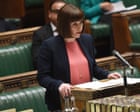
Chancellor Projects Growth But OBR Lacks Evidence to Support Claims

Chancellor Maintains Growth Optimism Despite OBR Skepticism
The Chancellor has expressed confidence that the latest budget will deliver significant economic growth, even as the Office for Budget Responsibility finds insufficient evidence to substantiate such optimistic projections. This divergence between political expectations and independent economic analysis highlights ongoing tensions within government regarding fiscal policy and long-term economic strategy.
Budget growth forecasts remain central to the government's economic narrative, yet the OBR's cautious assessment raises important questions about the realistic impact of recent budgetary measures. The Chancellor's bullish outlook contrasts sharply with the independent watchdog's more measured evaluation of potential economic performance.
Understanding the OBR's Position
The Office for Budget Responsibility, established as an independent authority to provide objective economic analysis, has not identified compelling evidence supporting claims that the budget will generate substantial growth. This position reflects the institution's commitment to evidence-based forecasting rather than political aspiration.
The OBR's analysis typically examines multiple economic indicators, including consumer spending patterns, business investment trends, employment figures, and sectoral performance. When these metrics do not align with government projections, the organization maintains its independent assessment despite political pressure to offer more favorable conclusions.
Chancellor Economic Policy Under Scrutiny
Recent chancellor economic policy has focused on various fiscal interventions designed to stimulate activity across different sectors. These measures include tax adjustments, spending allocations, and regulatory modifications intended to create conditions favorable for business expansion and employment growth.
However, the implementation of chancellor economic policy faces scrutiny from multiple quarters. Economic analysts question whether specific measures address fundamental structural challenges within the economy. Critics argue that without addressing underlying productivity issues and investment gaps, temporary fiscal stimulus may produce limited long-term benefits.
Political Confidence Versus Economic Reality
The government's UK budget confidence appears rooted in belief that coordinated fiscal measures will unlock growth potential. Officials point to specific policy initiatives they believe will enhance business competitiveness and consumer spending capacity. This political optimism, however, must be evaluated against independent economic assessment.
The distinction between political expectation and economic evidence matters considerably for policy credibility. When independent institutions like the OBR diverge from government projections, it raises legitimate questions about forecast reliability and underlying assumptions. Such divergence does not necessarily indicate government dishonesty but rather reflects differing methodologies and risk assessments.
Economic Growth Projections in Context
Economic growth projections represent educated estimates based on current conditions, historical trends, and anticipated policy impacts. Multiple factors influence actual economic performance, including international conditions, consumer confidence, business investment decisions, and unforeseen developments.
The OBR's skepticism regarding current budget growth forecasts suggests economists believe existing evidence does not support particularly optimistic scenarios. This assessment does not preclude growth occurring; rather, it indicates the independent analysis finds the Chancellor's confidence not sufficiently grounded in measurable supporting evidence.
Broader Policy Implications
The debate between government optimism and OBR caution reflects fundamental questions about economic management. How should policymakers balance aspirational objectives with realistic assessment? What weight should political judgment receive relative to independent economic analysis?
These questions carry implications beyond immediate budget discussions. They influence business planning, investment decisions, consumer behavior, and international economic relationships. When government projections diverge significantly from independent assessment, market participants must decide which forecast to credit.
Moving Forward
The Chancellor's continued confidence in the budget's growth potential will be tested against emerging economic data over coming months. Actual performance will demonstrate whether political optimism or economic skepticism proves more accurate. Meanwhile, the divergence between government and OBR perspectives underscores the importance of maintaining independent economic analysis and transparent policy communication.
As the economic picture develops, monitoring both official projections and independent assessments will remain essential for understanding genuine growth prospects and evaluating policy effectiveness.