FIFA President Infantino Faces World Cup Boycott Crisis After UEFA Rejection
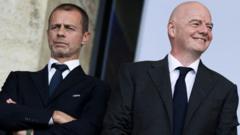
FIFA President Infantino Confronts Unprecedented World Cup Boycott Threat
The global football landscape has been shaken by extraordinary developments surrounding FIFA President Infantino and potential World Cup disruptions. UEFA's unprecedented threat to boycott the tournament, combined with Concacaf's rejection of Infantino's funding initiative, has created a perfect storm within international football governance.
In an astonishing 48-hour period, two major continental confederations have taken aggressive stances that directly challenge FIFA President Infantino's leadership and proposed reforms. These simultaneous actions represent the most serious threat to the organization's stability in recent memory and raise fundamental questions about the future direction of world football.
Understanding UEFA's Boycott Threat
UEFA's decision to threaten a World Cup boycott stemmed from disagreements over the international match calendar and funding distribution mechanisms. European football's governing body has grown increasingly frustrated with FIFA President Infantino's unilateral decision-making regarding tournament scheduling and financial allocations that they view as unfavorable to their member associations.
The threat carries significant weight because European nations represent some of football's strongest teams and commercial interests. A UEFA boycott would fundamentally alter the competitive landscape of any World Cup edition, potentially rendering the tournament less attractive commercially and competitively. This makes UEFA's position one of the most consequential challenges FIFA President Infantino has faced since assuming office.
European confederations have expressed concerns that FIFA President Infantino's proposals inadequately compensate their clubs and federations for player release during increasingly crowded international calendars. The timing of World Cup competitions alongside domestic league seasons has created unprecedented scheduling conflicts that UEFA argues threaten the integrity of their competitions.
Concacaf's Rejection of Funding Framework
Meanwhile, the Confederation of North, Central America and Caribbean Association Football (Concacaf) rejected FIFA President Infantino's comprehensive funding plan, which intended to redistribute World Cup revenues across confederations. This rejection suggests that even the president's financial proposals fail to satisfy diverse regional interests within international football.
Concacaf's decision indicates that FIFA President Infantino's attempts to broker consensus through financial restructuring have encountered substantial resistance. The rejection signals that member confederations prioritize autonomy and favorable terms over FIFA President Infantino's centralized approach to resource allocation.
By spurning the funding framework, Concacaf demonstrated that monetary incentives alone cannot resolve fundamental governance disputes. The organization seeks meaningful input into decision-making processes rather than accepting predetermined arrangements established by FIFA President Infantino's administration.
Implications for FIFA President Infantino's Future Leadership
The convergence of these challenges raises legitimate questions about whether FIFA President Infantino can maintain his authority and effectively govern the sport. The simultaneous rejection from major confederations suggests his leadership model has lost critical support among influential stakeholders in international football.
FIFA President Infantino's tenure has been marked by ambitious reform initiatives and controversial decisions regarding tournament expansion and scheduling. However, the current crisis reveals the limits of imposing top-down solutions without sufficient consensus-building among confederations representing diverse interests and priorities.
Political survival in international sports governance often depends on maintaining coalition support among key stakeholders. FIFA President Infantino's ability to navigate this crisis will determine whether he can restore confidence or whether these developments precipitate his political decline within the organization.
The Road Ahead for International Football
Several potential scenarios could unfold in coming weeks and months. FIFA President Infantino might attempt to negotiate directly with UEFA and Concacaf, offering concessions on contentious issues like scheduling and revenue distribution. Alternatively, confederations could escalate their positions, creating genuine disruption to World Cup preparations and international match schedules.
FIFA President Infantino could seek to consolidate support among confederations less directly opposed to his agenda, attempting to form alternative coalitions. However, this approach risks further fragmenting international football governance and undermining FIFA's institutional legitimacy.
The fundamental challenge facing FIFA President Infantino involves reconciling competing interests across diverse confederations while maintaining the organization's structural integrity. Without meaningful dialogue and compromise, international football faces potential paralysis that could damage the World Cup and undermine FIFA's credibility as a governing body.
Broader Consequences for Global Football
Beyond political intrigue, these disputes threaten practical consequences for players, clubs, and fans worldwide. Scheduling conflicts and funding uncertainties create operational challenges for domestic leagues struggling to release players for international duties. Revenue distribution questions affect club investments and player compensation across the professional game.
The current crisis demonstrates that international football governance requires sustained engagement with diverse stakeholder interests. FIFA President Infantino's approach to consolidating power and implementing rapid reforms has generated resistance that now threatens the sport's institutional stability and competitive integrity.


