Glacier Collapse Triggers Catastrophic Nepal-Tibet Floods
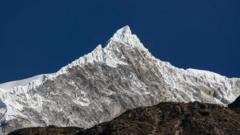
Glacier Collapse Confirmed as Source of Nepal-Tibet Floods
A glacier collapse floods Nepal and Tibet, according to preliminary findings from scientific research teams investigating the catastrophic event. The environmental disaster has prompted experts to focus renewed attention on the accelerating degradation of Himalayan ice formations, a phenomenon directly linked to climate change and rising global temperatures affecting mountainous regions worldwide.
Understanding the Glacier Collapse
Initial assessments conducted by glaciologists and hydrologists reveal that the structural failure of a mountain glacier triggered the massive water surge. This glacier collapse floods mechanism demonstrates how rapidly destabilized ice masses can release tremendous volumes of water with little warning. Scientists examining the aftermath observed clear evidence of ice detachment, erosion patterns, and debris fields consistent with a sudden glacial breakdown rather than gradual seasonal melt.
The Himalayan Context
The Himalayan mountain range hosts thousands of glaciers that serve as critical freshwater reservoirs for billions of people across Asia. However, these frozen formations face unprecedented threats from warming atmospheric conditions. The glacier collapse floods incident underscores the vulnerability of these ancient ice bodies to rapid environmental changes occurring over just a few decades.
Rapid Melting of Himalayan Ice
Scientists emphasize that the rate of Himalayan glacier melting has accelerated dramatically in recent years. Temperature increases in high-altitude regions are occurring at roughly twice the global average rate, a phenomenon known as elevation-dependent warming. This intensified heating destabilizes glacier structures, weakens internal ice cohesion, and increases the probability of catastrophic failures like the one that produced the devastating floods in Nepal and Tibet.
Data and Observations
Satellite imagery and field observations confirm that numerous Himalayan glaciers have retreated significantly since the 1990s. Some glaciers have lost hundreds of meters of ice thickness, while others have fragmented into smaller disconnected masses. These changes fundamentally alter the delicate balance of forces that keep glaciers stable on steep mountain slopes.
Implications for Downstream Communities
The Nepal-Tibet floods resulting from the glacier collapse affect millions of residents throughout the region. Communities in river valleys depend on predictable seasonal water flow patterns established over centuries. A sudden catastrophic release of glacial water devastates infrastructure, agriculture, and settlements that evolved with traditional hydrological rhythms. The glacier collapse floods disaster reveals how climate-driven changes to mountain systems create new hazards for vulnerable populations.
Climate Change and Future Risks
Researchers warn that as global temperatures continue rising, similar glacier collapse events may become more frequent. The Himalayan region faces particular risk because of its immense number of glaciers and the sensitivity of high-altitude ecosystems to temperature changes. Continued atmospheric warming will inevitably produce additional instability in mountain ice formations, potentially triggering more devastating floods in coming years.
Long-term Monitoring Efforts
In response to the Nepal-Tibet glacier collapse floods incident, scientists advocate for enhanced monitoring networks across the Himalayan range. Real-time observation systems, including seismic sensors and satellite surveillance, could provide early warning of unstable glaciers before catastrophic failure occurs. Such infrastructure investments represent critical adaptation measures for regions dependent on mountain water resources.
Scientific Research and Future Studies
The catastrophic glacier collapse floods event provides valuable data for understanding how climate change physically transforms mountain environments. Detailed investigations of the collapse mechanics, water discharge rates, and downstream impacts contribute to improved hazard prediction models. Scientists continue analyzing collected samples, geological features, and hydrological measurements to develop more sophisticated understanding of glacier stability under changing climate conditions.
Regional and Global Significance
The glacier collapse floods affecting Nepal and Tibet represent a microcosm of broader environmental transformations occurring across the world's mountain systems. Glaciers in the Alps, Rocky Mountains, and Andes similarly experience rapid retreat and increased instability. The Himalayan case study provides crucial insights applicable to mountain communities globally facing similar climate-driven hazards and resource challenges.
Conclusion
Preliminary scientific investigations definitively linking the Nepal-Tibet glacier collapse floods to climatic factors highlight the urgent need for climate action and adaptation planning. The incident demonstrates that mountain hazards represent not merely geological curiosities but pressing threats to human communities worldwide. As the glacier collapse floods tragedy illustrates, addressing climate change remains essential for protecting vulnerable populations in mountainous regions.


