Healey Vetoes Offshore Wind Projects Unless Bills Drop
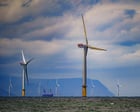
Chancellor's Offshore Wind Stance Signals Policy Shift
John Healey, the UK's Chancellor, has announced a significant condition for approving new offshore wind projects: they must demonstrably lower household bills. This offshore wind projects veto approach marks a notable evolution in government energy strategy and has sparked renewed debate about the nation's commitment to renewable energy development.
The chancellor's conditional approach to offshore wind projects reflects growing pressure to balance environmental goals with immediate economic relief for consumers. By making bill reduction a prerequisite for approval, Healey has introduced a performance-based framework that fundamentally changes how future renewable energy infrastructure will be evaluated.
Clean Energy and Energy Price Relief
During recent announcements, Healey emphasized that clean power represents a crucial mechanism for breaking the stranglehold that international gas prices exert on UK energy bills. He articulated that the transition to renewable sources must occur at an appropriate pace and in suitable locations, with adequate grid infrastructure available to distribute the generated power effectively.
This statement underscores a tension within energy policy: the urgent need to transition toward renewable sources while simultaneously addressing immediate cost-of-living pressures affecting British households. The chancellor's messaging suggests that timeline and location of offshore wind project development will become critical factors in governmental decisions.
Concerns About Renewables Agenda
Industry observers and environmental advocates have expressed concerns that these conditions on offshore wind projects may indicate the government is retreating from its previously stated pro-renewables agenda. The veto threat, while framed as pragmatic policy management, has prompted questions about whether renewable energy development will continue at the pace required to meet long-term climate commitments.
The offshore wind projects veto announcement comes amid ongoing discussions about energy independence and price stability. Government officials have repeatedly stated their support for renewable energy as a pathway to reduced reliance on fossil fuel imports, which have historically been subject to volatile international markets.
Grid Infrastructure and Project Implementation
A key element of Healey's position centers on grid capacity. The chancellor emphasized that effective implementation of offshore wind projects requires corresponding investment in transmission infrastructure. Without adequate grid systems to transport renewable electricity from generation sites to population centers, even successful wind farms cannot maximize their potential benefits to consumers.
This infrastructure requirement adds another layer of complexity to future project approvals. Developers must now consider not only production capacity and construction feasibility but also demonstrate how their projects will integrate with national grid systems and contribute to overall bill reduction objectives.
Policy Implications and Future Outlook
The chancellor's conditional approach to offshore wind projects may reshape how renewable energy investments are prioritized and approved in the coming years. Projects that clearly contribute to cost reduction will likely receive preferential treatment, while those primarily focused on carbon reduction or grid diversification might face scrutiny.
This framework could influence project financing, construction timelines, and technological choices as developers adapt their proposals to meet bill-reduction criteria. The offshore wind projects sector now faces clearer parameters but also increased uncertainty regarding project approval prospects.
Healey's position reflects broader governmental efforts to address dual priorities: transitioning toward sustainable energy and providing immediate economic relief to households facing higher energy costs. Whether this approach successfully achieves both objectives remains to be seen, as does its ultimate impact on the UK's renewable energy trajectory and climate commitments.