Helium-3: The Moon's Valuable Resource Transforming Energy
Understanding Helium-3 and Its Growing Importance
Helium-3 represents a remarkable isotope that has captured the attention of scientists, energy experts, and space exploration advocates worldwide. This rare element possesses extraordinary potential for transforming how humanity generates power, which explains why Helium-3 has become the focus of ambitious lunar mining initiatives and research programs across multiple nations.
Unlike its more common counterpart, Helium-4, Helium-3 contains two protons and one neutron, creating a lightweight noble gas with unique nuclear fusion properties. The scarcity of this isotope on Earth, combined with its exceptional energy-generation capabilities, has positioned Helium-3 as a critical resource for next-generation power systems and advanced technological applications.
The Challenges of Earth-Based Helium-3 Production
Currently, acquiring Helium-3 through terrestrial methods proves extraordinarily expensive and inefficient. The element exists in minute quantities within Earth's atmosphere, requiring sophisticated extraction processes that demand significant financial investment and specialized infrastructure. These limitations have led researchers to explore alternative sources for obtaining sufficient quantities of this valuable isotope.
The current market constraints surrounding Helium-3 availability create substantial barriers for researchers developing fusion energy technologies and other innovative applications. As demand projections indicate exponential growth in coming decades, scientists recognize that conventional Earth-based sources cannot possibly satisfy future requirements, driving exploration toward extraterrestrial solutions.
Why the Moon Holds Exceptional Promise for Helium-3
The lunar surface presents unprecedented opportunities for Helium-3 extraction and collection. Over billions of years, solar winds have deposited remarkable quantities of this isotope directly into the moon's regolith—the loose, fine-grained material covering the lunar terrain. Scientific analysis suggests that the moon contains sufficient Helium-3 reserves to power human civilization for centuries, making lunar mining a strategically important frontier for space-based resource extraction.
Unlike Earth's thin atmosphere, which provides minimal protection against solar radiation, the moon's exposed surface has accumulated substantial amounts of Helium-3 without atmospheric interference. This geological advantage makes the lunar environment an ideal location for harvesting this precious resource at scales previously impossible through terrestrial mining operations.
Forecasted Demand Surge and Market Projections
Energy experts and industry analysts project dramatic increases in Helium-3 demand throughout the coming decades. As fusion energy technology advances and moves toward commercial viability, requirements for this isotope will escalate significantly. The anticipated global energy transition toward cleaner, more sustainable power sources directly correlates with expanding interest in Helium-3-based fusion reactors and related technologies.
This surging demand trajectory justifies substantial investment in lunar infrastructure and mining technology development. International space agencies and private aerospace companies recognize the economic advantages of positioning themselves within the emerging Helium-3 industry, prompting increased commitment to research and exploration programs.
Lunar Mining Technology and Implementation Strategies
Developing viable lunar mining operations requires revolutionary advances in robotics, autonomous systems, and extraction methodologies. Engineers are designing specialized equipment capable of operating in the moon's extreme environment, where temperatures fluctuate dramatically and radiation exposure presents constant challenges. These technological innovations represent the foundation for establishing sustainable resource extraction infrastructure on the lunar surface.
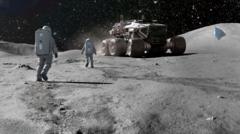
Multiple space agencies have outlined detailed plans for establishing mining operations that would collect regolith, heat it to extract Helium-3, and prepare the refined isotope for transportation back to Earth or direct utilization in lunar-based facilities. These ambitious initiatives demonstrate serious commitment to transforming Helium-3 from theoretical resource into practical energy solution.
Future Implications and Global Energy Transformation
Successfully implementing Helium-3 lunar mining operations would fundamentally reshape global energy systems and geopolitical dynamics. Nations controlling access to lunar resources would gain unprecedented advantages in the fusion energy market, potentially revolutionizing international power structures and economic relationships. This scenario has prompted increased diplomatic discussions regarding space resource rights and international cooperation frameworks.
The transition toward Helium-3-based fusion energy represents humanity's most promising pathway toward achieving sustainable, virtually limitless clean power generation. As technological capabilities advance and lunar mining becomes increasingly feasible, this remarkable isotope will likely play a central role in determining humanity's energy future and environmental trajectory.


