Technology and Firefighters: Partners Against Wildfires
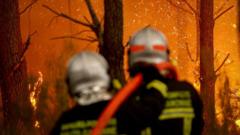
Technology and Firefighters: A Critical Partnership in Wildfire Management
The relationship between technology and firefighters represents one of the most significant developments in modern wildfire management. While technology and firefighters continue to evolve separately, their integration has become essential in addressing the growing challenge of wildfires across the globe. The question is no longer whether technology can replace firefighters, but rather how these two forces can work together more effectively to save lives and protect communities.
The Role of Advanced Detection Systems
Modern surveillance technology has revolutionized the way authorities identify and monitor wildfires in their earliest stages. Satellite imagery, drone surveillance, and thermal imaging cameras now provide real-time data that was previously impossible to obtain. These systems allow fire management agencies to detect smoke and heat signatures before fires spread beyond initial containment zones.
Early detection has proven crucial in reducing response times. When authorities can pinpoint a fire's exact location within minutes of its ignition, ground teams can mobilize more efficiently. This technological advantage has transformed fire prevention strategies across multiple continents, enabling proactive rather than purely reactive approaches.
Artificial Intelligence and Predictive Analytics
Artificial intelligence systems now analyze weather patterns, vegetation density, and historical fire data to predict high-risk zones. Machine learning algorithms process thousands of data points to forecast conditions likely to fuel rapid fire spread. These predictive models help authorities position resources strategically and prepare communities in vulnerable areas.
Despite these advances, artificial intelligence cannot extinguish flames or rescue people trapped in dangerous situations. The technology serves as an early warning system and planning tool, but the actual firefighting work requires human expertise, physical presence, and rapid decision-making capabilities that machines cannot fully replicate.
Why Firefighters Remain Irreplaceable
Firefighters bring irreplaceable skills and judgment to wildfire response. These professionals assess complex situations on the ground, adapt strategies to changing environmental conditions, and execute rescue operations in extreme circumstances. A firefighter can read wind patterns, evaluate terrain stability, and make split-second decisions that save lives.
The physical demands of firefighting remain beyond current technological capabilities. Firefighters navigate through smoke, heat, and hazardous terrain to access evacuation routes, suppress flames using specialized equipment, and protect structures threatened by advancing fire. Their training encompasses emergency medical response, structural assessment, and crisis management.
Integrated Systems for Maximum Effectiveness
Progressive fire management agencies now implement integrated systems combining technology and human expertise. Ground-based sensors report real-time conditions to command centers where firefighters and analysts coordinate response efforts. Drones provide aerial surveillance while ground teams execute tactical operations based on this intelligence.
Communication technology connects firefighters across vast areas, enabling coordinated efforts among multiple agencies and jurisdictions. Mobile applications provide crews with updated fire behavior modeling, resource availability, and evacuation route information. These tools enhance firefighter safety by reducing uncertainty and improving situational awareness.
The Future of Wildfire Management
The most effective wildfire management strategies recognize both the limitations and strengths of available technologies. Autonomous water-dropping aircraft and drone-delivered water supplies show promise for supporting initial suppression efforts in remote areas. However, these innovations work best alongside experienced firefighting teams who direct operations and manage complex scenarios.
Research continues into firefighting robots and remote-operated suppression equipment, but development timelines suggest these technologies remain years away from practical deployment in active fire conditions. Meanwhile, technology and firefighters today must maximize collaboration using currently available tools.
Preparing for Future Challenges
Climate change and expanding urban-wildland interfaces suggest wildfire threats will continue intensifying. This reality makes the integration of technology and firefighters even more critical. Investment in both advanced detection systems and firefighter training, equipment, and staffing levels is necessary for communities to meet emerging challenges.
The answer to whether technology can replace firefighters is definitively no. Instead, forward-thinking communities invest in both domains simultaneously, recognizing that the most resilient wildfire response systems combine cutting-edge innovation with experienced human professionals working in coordinated partnership.


