UK Must Lead European Defence Without US Support, Starmer Warns
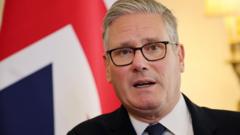
European Defence Independence Becomes Urgent Priority
The United Kingdom's commitment to European defence independence has taken centre stage as political leaders confront a fundamental shift in international security dynamics. Prime Minister Sir Keir Starmer has delivered a stark warning that the continent can no longer depend on American financial backing for its military capabilities, signalling that a new era of strategic autonomy is essential for Europe's future.
Starmer's assessment reflects growing concerns about shifting geopolitical responsibilities and the need for European nations to reassess their defence spending and military readiness. The Prime Minister emphasized that European defence independence is no longer optional but rather an imperative that demands immediate attention and coordinated action across the continent.
The End of American Financial Guarantees
In his remarks addressing the future of transatlantic relations, Starmer made clear that the United States has explicitly communicated its intention to step back from its traditional role of subsidizing European military operations. This represents a significant departure from the post-World War II arrangement where American resources have underwritten much of NATO's collective defence framework.
The Prime Minister stressed that circumstances have fundamentally altered and that European nations cannot anticipate a return to previous financial arrangements. His message underscores a reality that policymakers across the continent must now confront: the era of American-bankrolled defence commitments appears to be concluding, requiring Europe to mobilize its own resources and capabilities on an unprecedented scale.
Restructuring European Security Architecture
Starmer's warnings align with broader European discussions about strengthening the continent's military infrastructure independent of American support. NATO allies face mounting pressure to increase defence expenditures, develop indigenous technological capabilities, and establish more cohesive strategic frameworks that reduce reliance on American military guarantees.
The implications are substantial for European defence initiatives. Nations across the European Union and NATO must now prioritize defence investments that demonstrate genuine commitment to collective security. This shift necessitates not only increased financial commitments but also enhanced coordination in weapons development, military procurement, and operational planning.
NATO Allies Confronting New Realities
Member states within NATO are grappling with the practical consequences of reduced American engagement. The traditional security umbrella that Washington provided for decades has created dependencies that now require systematic restructuring. European capitals must evaluate their defence capabilities honestly and determine what level of investment is necessary to maintain credible deterrence without American financial support.
The challenge extends beyond simple budget increases. European nations need to develop integrated command structures, shared intelligence systems, and coordinated defence procurement to maximize efficiency and effectiveness. These structural reforms demand political will and sustained commitment across multiple governments and defence ministries.
Strategic Implications for Britain and Europe
As a leading European power, the United Kingdom faces particular responsibilities in articulating and leading this transition toward greater defence autonomy. Starmer's positioning suggests Britain intends to play a central role in coordinating European responses to this strategic realignment. British defence capabilities, technological expertise, and diplomatic influence will be critical in helping other European nations adapt to this new security environment.
The Prime Minister's statements also reflect recognition that European allies cannot indefinitely maintain their current force structures and defence postures without substantially increased domestic investment. The comfortable assumptions of the previous decades—that American resources would always remain available—must be abandoned in favour of realistic assessments of what each nation can and must provide.
Long-Term Transformation of Defence Strategy
Looking forward, Europe faces a multiyear transformation process that will reshape military capabilities, defence procurement decisions, and strategic priorities. Nations will need to balance defence investments against other budgetary pressures while demonstrating genuine commitment to NATO obligations and collective security arrangements.
Starmer's warning serves as both acknowledgment of present realities and a call to action for European leadership. The message is unambiguous: the continent must embrace European defence independence as a core strategic objective, recognizing that this transformation will require sustained commitment, substantial resources, and coordinated action among allied nations. The era of predictable American financial support has ended, and European nations must now chart a course toward genuine strategic autonomy and self-reliance in defence matters.


