US Navy Sends Relief Carrier to Replace USS Lincoln Amid Crew Crisis
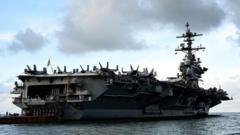
US Aircraft Carrier Relief Mission Underway
The United States Navy has initiated an urgent deployment to address critical conditions aboard the USS Lincoln, one of its most advanced nuclear-powered aircraft carriers. A second US aircraft carrier relief operation is now in motion as officials respond to mounting concerns that have accumulated among the ship's crew members over recent weeks.
According to reports reaching military and defense officials, thousands of sailors stationed on the USS Lincoln have endured harsh living conditions, prompting Navy leadership to expedite the rotation schedule. The situation has become serious enough to warrant immediate intervention, with the relief vessel expected to arrive and assume operational duties while the Lincoln undergoes necessary repairs and crew rotations.
Widespread Operational Challenges on USS Lincoln
The problems documented on the USS Lincoln span multiple critical ship systems, creating a deteriorating situation for the vessel's personnel. Food shortages have become a persistent issue, limiting meal options and nutritional variety for the thousands of sailors who depend on shipboard galley services during extended deployments at sea.
Beyond provisioning challenges, the ship's infrastructure has suffered significant degradation. Broken plumbing systems have affected crew quarters and essential facilities, compromising sanitation and basic living standards. These infrastructure failures represent more than mere inconveniences—they create genuine health and safety concerns for personnel confined to the vessel during maritime operations.
Crew Morale and Retention Concerns
The accumulation of these hardships has reportedly affected crew morale to alarming levels. Personnel aboard the USS Lincoln have expressed their distress through various channels, with some sailors reportedly contemplating extreme measures, including the possibility of jumping overboard. Such statements, while not uncommon in expressions of extreme frustration, nonetheless indicate the depth of desperation some crew members have experienced.
The Navy takes such expressions seriously as potential indicators of mental health crises and deteriorating conditions. Mental health support resources have been mobilized, and command staff has been tasked with addressing both the immediate infrastructure problems and the psychological welfare of affected personnel.
US Aircraft Carrier Relief and Operational Continuity
The deployment of a relief aircraft carrier represents the Navy's commitment to maintaining operational readiness while protecting personnel welfare. The USS Lincoln, despite its advanced capabilities and prestigious role in the fleet, cannot continue operations under these compromised conditions without risking both mission effectiveness and crew safety.
The incoming US aircraft carrier will assume the USS Lincoln's assigned missions and operational responsibilities, allowing the nuclear-powered vessel to return to port for comprehensive maintenance and repairs. This rotation addresses both the immediate infrastructure failures and provides crew members with much-needed shore leave and respite from extended maritime deployment conditions.
Navy Response and Preventative Measures
The USS Lincoln situation has prompted Navy leadership to examine broader fleet-wide conditions and supply chain vulnerabilities. The scale of reported issues suggests that logistical systems supporting extended carrier deployments may require restructuring or enhanced oversight.
Ship maintenance protocols are being reviewed to prevent similar infrastructure failures on other vessels. The food provisioning systems that contributed to shortages aboard the USS Lincoln are also facing scrutiny, with officials investigating whether comparable vulnerabilities exist across the fleet's carrier groups.
Timeline and Crew Impact
The exact timeline for the relief vessel's arrival and assumption of duties remains classified for operational security reasons. However, military sources indicate that the transition should occur within the coming weeks, providing relief to the USS Lincoln's personnel relatively soon.
For the sailors who have endured these conditions, the arrival of a relief US aircraft carrier represents more than tactical repositioning—it signals that their concerns have been heard and that Navy command is taking concrete action to address their welfare. Crew rotations following the ship's return to port will enable personnel to disconnect from the stressful deployment environment and benefit from proper medical evaluation and leave policies.
Broader Fleet Management Implications
This situation underscores the challenges inherent in managing massive naval platforms that maintain global presence. Aircraft carriers require constant support, maintenance, and crew welfare considerations that extend beyond purely operational metrics. The USS Lincoln incident provides case study material for how Navy leadership allocates resources and prioritizes personnel wellbeing during extended deployments.
As naval operations continue to demand extended underway periods, the balance between operational necessity and human factors becomes increasingly critical. The US aircraft carrier relief mission represents an acknowledgment that sustained military readiness depends fundamentally on maintaining serviceable equipment and healthy personnel.


