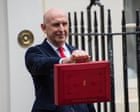
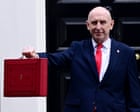
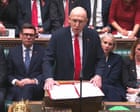
Farage Avoids Commons Over Seating Row Fears Amid Budget Response
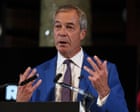
Farage Absent from Budget Session Due to Seating Dispute Concerns
Nigel Farage, the prominent Reform UK leader, notably abstained from attending the chancellor's budget presentation in the House of Commons, citing apprehensions about a potential physical confrontation with a fellow parliamentary member over seating arrangements. This absence by Nigel Farage marked a significant moment during the government's fiscal announcement, prompting widespread media attention and speculation about internal Westminster tensions.
Rather than participating directly in the chamber proceedings, the Reform UK leader opted to hold a separate press conference following the budget announcement, where he articulated his party's response to the government's financial proposals and reaffirmed key policy positions on several contentious issues.
Criticism of Ukraine Funding Allocation
During his post-budget commentary, Nigel Farage expressed considerable dismay regarding the government's allocation of £10 billion in financial support directed toward Ukraine. The Reform UK leader characterized his reaction as one of shock, suggesting that the funding commitment represented a significant departure from what he considered appropriate fiscal priorities for the British government.
Farage's criticism of the Ukraine funding demonstrated his party's broader skepticism toward substantial international aid commitments, particularly in the context of domestic economic challenges. This position aligned with Reform UK's electoral messaging during recent parliamentary campaigns, where the party emphasized redirecting government spending toward domestic initiatives rather than international assistance programs.
Cryptocurrency Investment Tax Reduction Advocacy
Beyond his objections to the Ukraine allocation, Nigel Farage reinforced Reform UK's commitment to implementing reduced tax obligations for cryptocurrency investors. The party leader doubled down on this policy stance, positioning it as a crucial component of his party's economic framework designed to encourage digital asset investment within the United Kingdom.
The emphasis on cryptocurrency tax relief reflected broader Reform UK policy objectives aimed at creating favorable conditions for emerging financial technology sectors and attracting investment capital. Farage presented this proposal as economically progressive, arguing that lower tax burdens on crypto investors would stimulate innovation and generate additional economic opportunities within the digital finance domain.
Parliamentary Seating Tensions and Political Context
The underlying seating dispute that prompted Nigel Farage's absence from the budget session reflected broader tensions within the House of Commons environment. Such physical space allocation disagreements, while seemingly procedural in nature, often carry symbolic weight regarding parliamentary power dynamics and party positioning within the chamber hierarchy.
Farage's decision to preemptively avoid the session rather than risk confrontation underscored the intensity of these tensions. His explicit reference to concerns about a physical altercation represented an unusual acknowledgment of the volatile nature of current parliamentary interactions, suggesting considerable friction between Reform UK and other parliamentary factions.
Strategic Communication Through Alternative Channels
By conducting his response through a dedicated press conference rather than parliamentary participation, Nigel Farage maintained his ability to communicate reform party positions while circumventing the disputed seating arrangement issue. This strategic approach allowed him to shape the narrative surrounding his party's response to the budget without direct chamber participation.
The press conference format provided Farage with an opportunity to deliver carefully prepared remarks without interruption and to control the framing of Reform UK's policy critiques. This communication methodology reflected evolving parliamentary practices where opposition voices increasingly utilize media channels to amplify their messages beyond traditional Commons debate structures.
Implications for Westminster Dynamics
Nigel Farage's absence and the circumstances surrounding it highlighted ongoing tensions within contemporary Westminster politics. The episode illustrated how procedural matters, combined with substantive policy disagreements, can create friction that influences parliamentary participation patterns and shapes how political discourse unfolds within the House of Commons.
The incident also underscored Reform UK's positioning as an outsider party challenging establishment consensus on multiple fronts, from international aid spending to emerging financial technology regulation. Farage's continued emphasis on these alternative policy positions, despite his physical absence from the budget announcement, reinforced his party's distinct political identity within the broader parliamentary landscape.